“Still, my intuition is that I actually feel worse now, two days after seeing Aidan, than I felt in the moment of seeing him. I know that what happened between us was just an event and not a symbol – just something that happened, or something he did, and not an inevitable manifestation of my failure in life generally. But when I saw him, it was like going through it all over again. And Alice, I do feel like a failure, and in a way my life really is nothing, and very few people care what happens in it. It’s so hard to see the point sometimes when the things in life I think are meaningful turn out to mean nothing, and the people who are supposed to love me don’t. I have tears in my eyes even typing this stupid email, and I’ve had nearly six months to get over it. I’m starting to wonder if I just never will. Maybe certain kinds of pain, at certain formative stages in life, just impress themselves into a person’s sense of self permanently.”
Sally Rooney, Beautiful World, Where Are You
“Having believed, you were marked in him with a seal…”
Ephesians 1:13
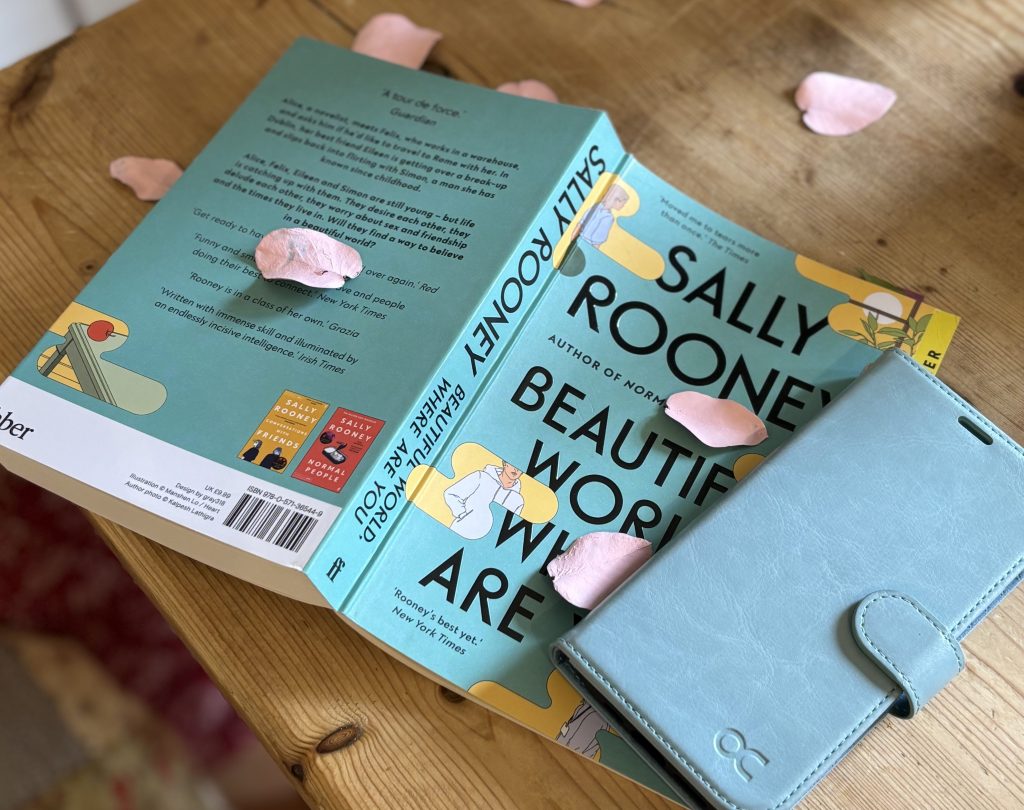
Irish writer Sally Rooney is known for her novels about relationships. Usually between young people, 18-30, navigating complicated friendships and life choices. The relationships are often ‘romantic’, sometimes toxic, impossibly unsustainable though occasionally committed. She also addresses family dynamics, exploring in her most recent novel, Intermezzo, the moving complications between two grieving brothers.
In the quote above, taken from her third novel, Beautiful World, Where Are You, Eileen is writing to a friend – Alice. About a broken relationship. This much is obvious. In the context of the novel, the relationship is romantic. This too is fairly obvious. “What happened between us” is a phrase that is typically attributed to romantic relationships but when I read this paragraph it occurred to me that in any relationship, something ‘happens’ between people. Rooney’s analysis of Eileen’s feelings at this point in her life shows her uncanny understanding of human interactions, the emotions they elicit and her masterful ability to describe them. She is insightful enough to realise that we often take the ‘happenings’ between human beings to be ‘symbols’ of something larger, more meaningful; sometimes blowing them out of all proportion and allowing them to define us altogether.”‘My life is really nothing”.
Eileen begins to conclude things about herself based on the failure of her relationship with Aiden. Later in the novel, once happily settled she reaches a different opinion of herself based on the love she now receives. ‘Maybe I’m not so bad, maybe even a good person.’ Her sense of self rides on a roller coaster of the elusive affections of others. She is human after all. It’s very understandable.
Rooney brilliantly captures the ongoing pain of the mark that a broken relationship situation can leave on a person whether wittingly or unwittingly inflicted. It might be a parent, a friend, a teacher or mentor or any pedagogical figure. It doesn’t have to be in the context of romantic rejection as it is for Eileen who wonders whether she’ll ever get over it. Perhaps we all fear at times, ‘that certain kinds of pain, at certain formative stages of life, just impress themselves into a person’s sense of self, permanently.’
They don’t have to.
A choice is made. Who defines me? Whose voice will I listen to? The struggle for the person who believes that he or she is redeemed by Christ is resolutely to choose His opinion and verdict over that of another or even his/her own. Another’s failure to ‘love’ whether as a parent, friend, sibling, husband, wife or any variation of these can indeed leave an indelible impression but when a person’s soul has been purchased for God, He makes a mark with His own seal.
Readers know the great comfort that can be found when a novelist describes so well the very pain you have yourself experienced. Great consolation may be derived from knowing that whatever blot is left by relationships that have cut us can be used for the comfort of others. The greatest relief is in believing that although these experiences may shape us, they do not have to define us. God, the Omniscient Narrator, has the last Word.

 Roques Reviews
Leave a comment