Living in a Multiverse: A Guide for Christians
Martin Davie
The Latimer Trust, 2024 (ISBN: 9781916834057 pb, 142pp)
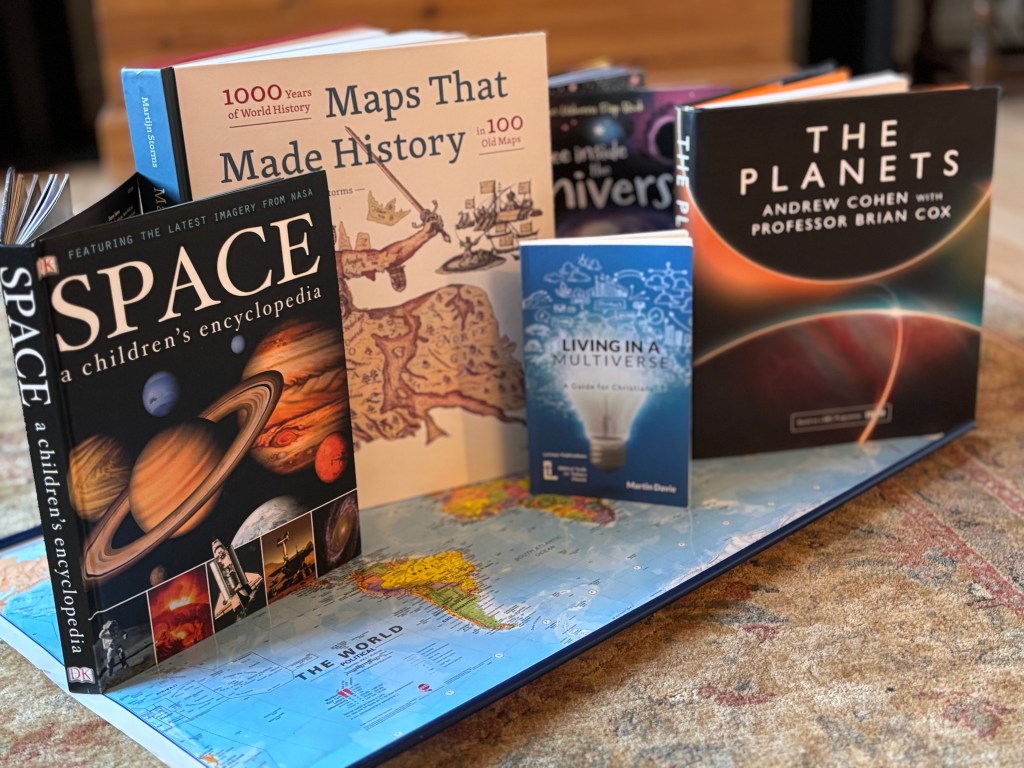
Presupposing an acquaintance with C.S. Lewis’ Narnia series, Davie artfully begins this short book by introducing the idea that living amongst multiple worldviews is a more familiar concept than we may realise. Just as in The Magician’s Nephew Polly and Digory are transported via attic corridors and the Wood between the Worlds to the cold dark realm of the Cabby and the witch Jadis (while Digory’s mother lies sick back in London), we too find that “people living in the same street may well live in radically different conceptual universes” (2). The key word here is “conceptual”. The Christian believes, indeed knows, that his “concept” is in fact the truth. Everyone else thinks the same of his own worldview, however sandy the ground on which he may actually be standing.
As early as page 3, Davie helpfully presents the three main aims of the book:
· to explain the Christian universe and why it is not only conceptual but actual;
· to explore other prevailing worldviews and where they come from;
· to establish how a Christian can live well amongst such a multiplicity of “mental universes”.
Davie’s “Guide for Christians” is essential reading for the church if we are to avoid becoming unwittingly ensnared in other mindsets, whilst exploring interesting and enticing alternative intellectual cupboards, and avoid being “tossed back and forth by the waves and blown here and there by every wind of teaching” (Eph 4:14), both within the church and without.
Davie (a keen gardener) is concerned with human flourishing (each chapter ends with viewing the material with this in mind) and as he walks us through the most prevalent current worldviews (owning that he cannot in so short a space cover them all) his heart for humanity to know life in all its fullness subtly shines.
This is a short book but by no means a light one. It is thoroughly researched with an extensive bibliography and combines tremendous simplicity of style with complexity of content.
Structurally, a highly organised work, taking the reader on a journey from his assumed starting post – Christian faith, through the philosophical options of Deism, Materialism and Postmodernism towards the religious alternatives of the Jewish, Islamic, Hindu, Buddhist and Sikh faiths in order of the known number of each faith’s adherents. Each faith position is not only explained in palatable summary but also courageously critiqued through the rigorous and authoritative lens of biblical truth.
Davie writes boldly and speaks plainly. For example, the postmodern critical theorist’s objection that any discourse produced by “those who are white, male, straight, cisgender (in other words, have a gender identity that corresponds with their biological sex) and who are not physically or mentally disabled” is “bad”, “oppressive” and “to be done away with in order that society can be changed for the better” (42,43) is deftly countered. “It is not oppressive to say that people should live according to their biological sex or should not have sex with someone of their own sex because the witness of both nature and Scripture tells us that both statements reflect the reality of who human beings are and how God wants them to live in consequence.” (46) Whilst one might not dive into a conversation with an unbelieving friend with this statement, it nevertheless serves to embolden the Christian who may struggle in conversations with passionate advocates of the non-biblical agenda.
Or, to cite another example, in the chapter on Islam, Davie writes regarding certain of its claims that “Islamic theology is mistaken in what it says about God, the human plight and God’s solution to it.” (68) Again, he writes this bold statement to the Christian to explain why this is so according to Scripture; he is not writing here to try to convert, nor offend, the Muslim.
This excellent and manageable paperback is let down by occasional editorial errors – a frustrating feature of many shorter Christian publications, but it is certainly a worthwhile and helpful read and guide to “living well in the multiverse”.


Leave a comment