
From September 1st new government legislation stipulated that UK schools are required to ensure that their pupils do not use a mobile device during the school day. Staff at the school where I work have been strongly encouraged to set an example making every effort themselves not to be seen with a phone between 8am and 6pm (with the exception of those reliant on a mobile device for health reasons).
A number of colleagues have commented on the relief they feel now that they have official permission not to walk about campus with their heads down in their emails or WhatsApp messages. Instead, they’re free to look one another in the eye, greet each other, or simply appreciate the autumnal shades cast on falling leaves as the very warm summer begins slowly to cool into September days.
Like many, I both love and hate my phone. The constant need to check and respond to messages; the drive to ask after others whom I know are struggling or to make contact with friends I perhaps rarely see in the flesh just to show that I’m still thinking of them. It can be exhausting.
I’m not denying the value of digital contact. I’m certainly not denying the beauty of a handwritten letter to someone who’s moved away. Nor am I denying the importance of investing in certain long-distance relationships – with family especially. I am wondering, however, whether I may be mistaken in thinking that I’m being a good friend by sending (perhaps too frequent) digital messages thereby putting an exhausting burden on others, to check, to read, to reply.
A reading of Virginia Evans’ successful debut novel, The Correspondent, recently brought this home to me. This epistolary novel follows the correspondence of one Sybil Van Antwerp, prolific letter-writer, retired lawyer, mother, grandmother, neighbour, friend and avid reader. Amongst others, she writes regularly to a young autistic boy, Harry Landy, on the 15th of every month by mutual agreement.
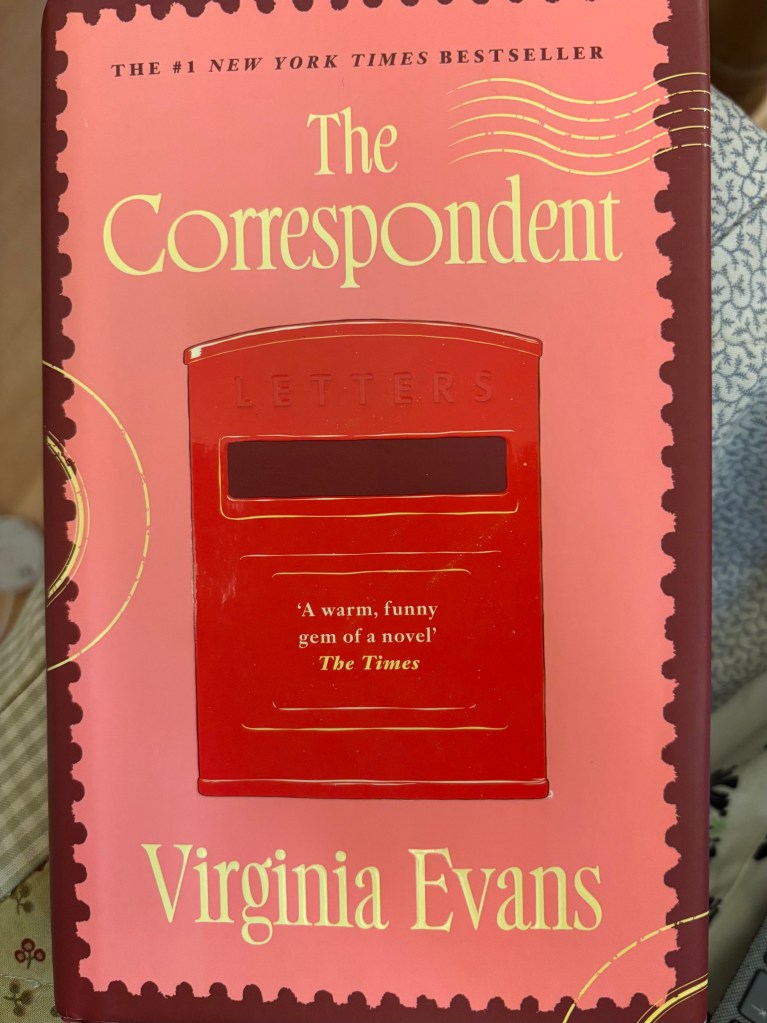
Harry finds comfort in his relationship with this maternal figure whilst he is growing up in tumultuous circumstances. She takes him in when he runs away from home and supports both him and his father through the letters she writes. About half way through the book, however, the letters from Harry start to dwindle. Sybil, however, holds to her part of their arrangement but then finally, after four months without a reply she receives the following:
Dear Ms Van Antwerp,
Thank you for the puzzle book. I finished it in five days. I was surprised you continued writing to me on the fifteenth of the months when I haven’t written you back in four months. Why did you keep writing? I was trying to tell you, without writing again, that I did not want to continue with the letters, but you didn’t understand. This is my last letter to you.
Sometimes, people just get tired of corresponding and a relationship as it once was changes, wilts, perhaps dies and it is not in any way a virtue to continue to communicate out of a sense of faithfulness if you are failing to read the signals that the friendship is no longer reciprocated.
Whilst Harry does in time resume contact with his erstwhile pen friend later in his life, when he has fulfilled a dream of writing a book, such re-connection does not always take place. Friendships come and go. We may mean something to someone in our life whilst our paths cross for a time but connection cannot be forced. While it is good to keep in touch, I wonder if it is also good to recognise that we cannot sustain an indefinite number of relationships and certainly not those geographically forced into a new shape. This is ok. In fact, it’s liberating. No longer so anxious to get in touch with someone I’ve inadvertently neglected on WhatsApp or iMessage, I’m looking around me at the people that I’m placed amongst. They too will move on soon enough. It’s good to invest in them whilst our lives run in parallel. It’s also good to let them go when the time comes.


Leave a comment